
A mate-in-two solution must force checkmate on your second move against every legal defense. Choose a candidate, list the defender’s replies, and find a verified mate for each branch.
Understand what two moves really means
In a conventional mate-in-two problem, the attacking side makes a move, the defender replies, and the attacker delivers mate. The defender is not cooperating. A beautiful line that works only after one convenient reply is a variation, not a solution.
Begin by reading the objective in Chess Puzzles. A mate-in-one position rewards immediate verification; a mate-in-two position asks for a move that survives a reply. This small change in the objective requires a much more disciplined search.
Build a short candidate list
Look at checks first because they limit the defender’s options. Also examine moves that create a direct mating threat, including quiet moves. A key move does not have to be a check. Sometimes checking too early lets the king escape before your other pieces can control the necessary squares.
For each candidate, state the threat in plain language: for example, the queen intends to reach a protected mating square. If you cannot identify a threat or an immediate reason the move matters, set it aside until you have tested the clearer candidates. This is a way to organize thinking, not a rule that every winning move must look forcing.
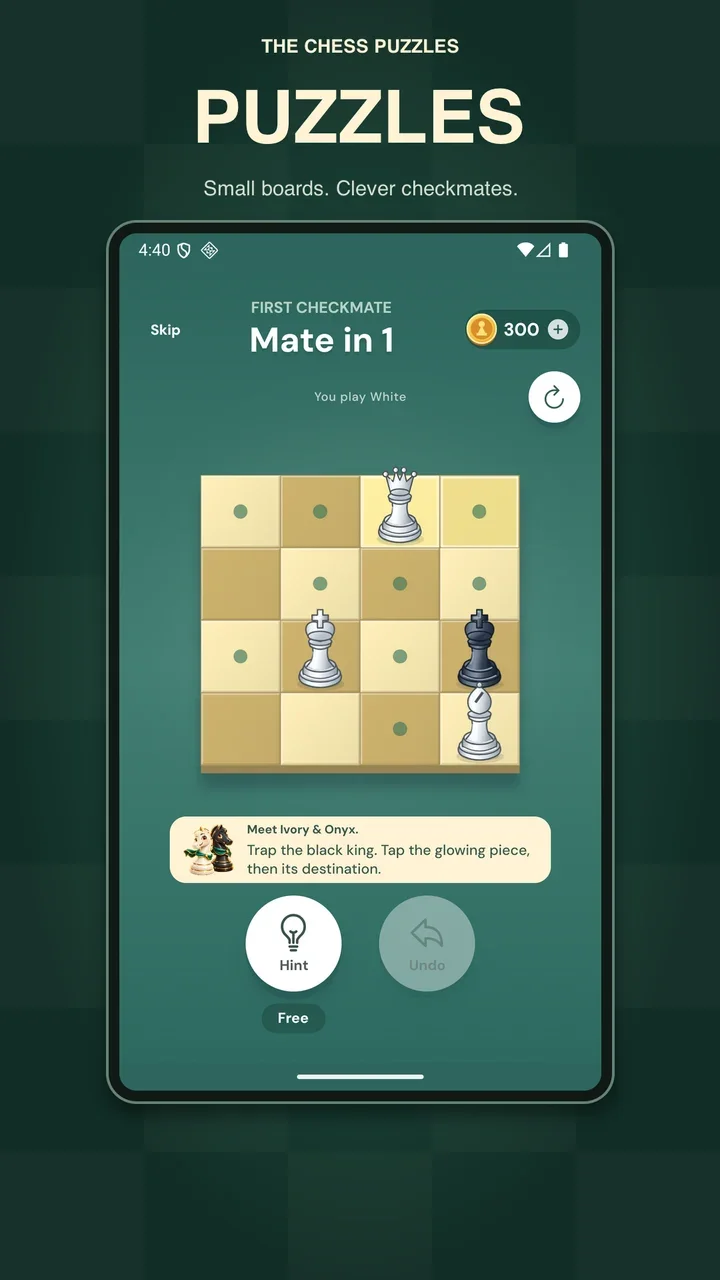 IN-GAME VIEW
Use the actual position to check escapes, captures and blocks. A forcing move still needs to survive every legal reply.
Gameplay reference, not a solution to a specific level.Find the reply that breaks your idea
Pretend you are defending the position. Can you capture the attacker, exchange a key supporting piece, create an escape square, block the mating line, or give a check that interrupts the threat? Search actively for those resources. The hardest reply to your idea is the most valuable one to inspect.
After each reply, calculate the attacker’s second move and verify actual checkmate. Reuse the mate-in-one checklist at the end of every branch: the king has no legal escape, the checking piece cannot be legally captured, and no valid block is available. Do not stop at a convincing-looking final diagram.
Keep branches separate
A reply changes the position. If the defender moves a bishop, that bishop no longer covers its old diagonal in exactly the same way. Do not combine a square controlled in one branch with a piece placement from another. Rebuild the final position for each defense, even if the mating move appears similar.
When a candidate fails against one legal reply, record the reason mentally and test the next candidate. Short calculation sessions can be useful when they end with a concrete lesson, such as overlooking a defensive check or forgetting a newly opened square. Chess Puzzles offers mates in one, two, and three; use the shorter problems to strengthen final-position checking before extending the calculation tree.
Quick answers
Must the first move in mate in two give check?
No. A quiet move can create a forced mating threat. The solution must still work against all legal defensive replies.
Can I stop after finding one winning line?
No. A forced mate must withstand every legal defense. One successful variation does not establish the whole solution.
Try it in Chess Puzzles.
Spot the checkmate hiding in plain sight. Work through handcrafted puzzles in one, two, or three moves.

 Coming soon
For standard piece movement and checkmate definitions: FIDE Laws of Chess, Articles 1–3. Follow each app’s displayed rules for its puzzle-specific objectives.